Water tanks, treatment basins and reservoirs carry more than the weight and hydrostatic pressure of the water they hold. During an earthquake, the contained water also moves and transfers additional forces to the structure. These are known as hydrodynamic effects.
Two Components: Impulsive and Convective
The behaviour of the water is generally considered in two parts. Part of the water moves together with the tank and exerts a sudden pressure on the walls: the impulsive component. The water near the free surface sloshes with a longer period: the convective component.
Sloshing adds forces on the walls and foundation, and it also produces waves at the surface. These waves affect the freeboard provided in the tank and, where there is one, the design of the roof.
What Governs The Effects
The magnitude of hydrodynamic effects depends on the tank's dimensions and shape, the water depth, the ground conditions and the seismic hazard of the site. Codes specific to water-retaining structures, such as ACI 350.3, set out how these effects are taken into account in design.
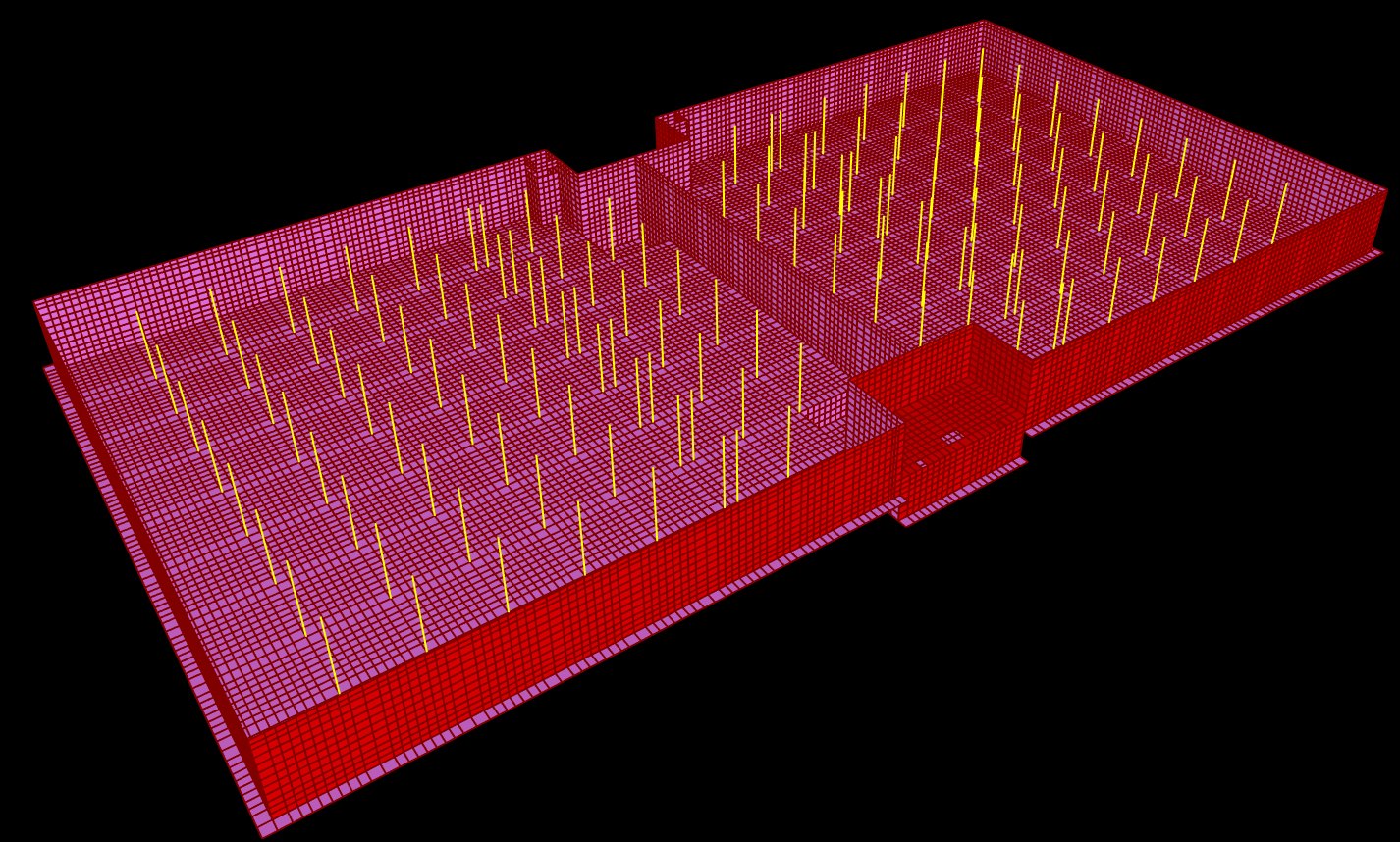
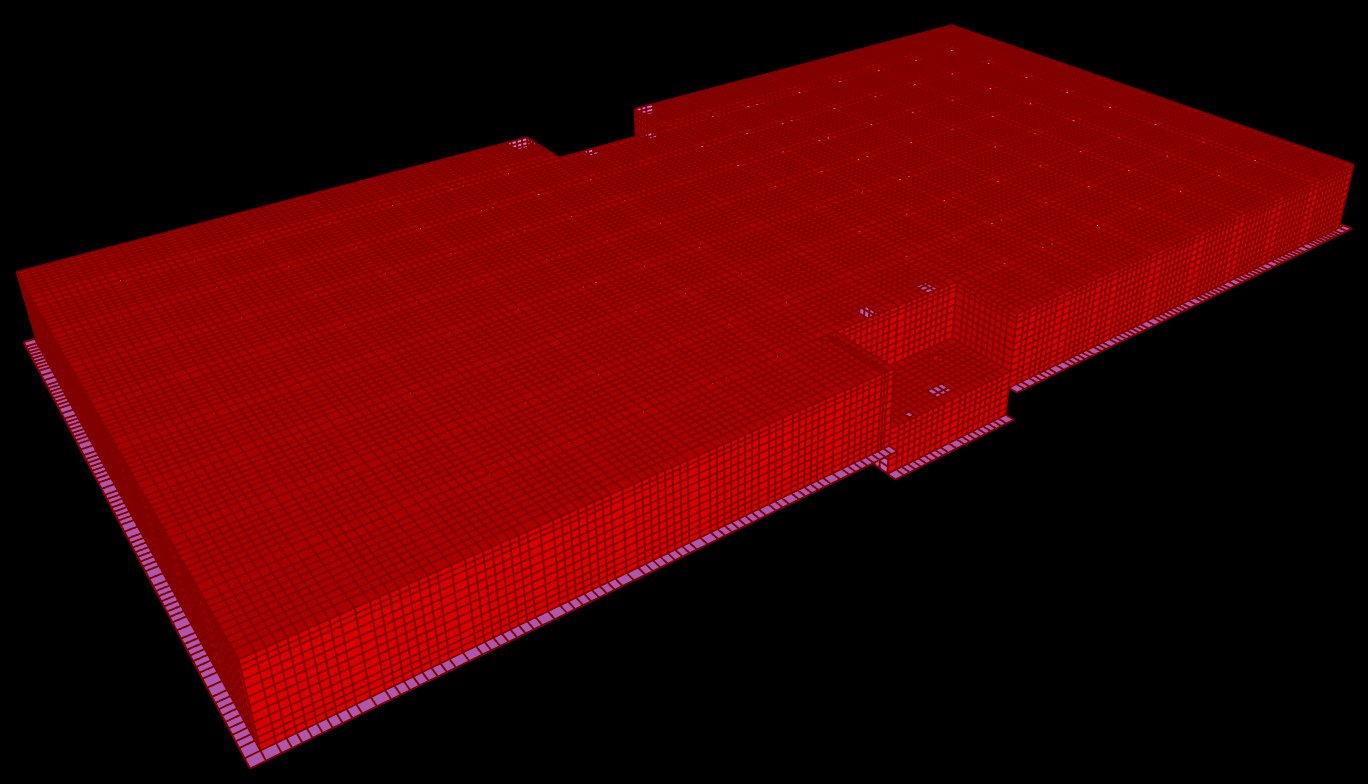
At Vektörel Yapı, we consider hydrodynamic effects in the structural design of water-retaining structures using the codes that apply to each project's location and specification. The model shown is from the Suluq Clean Water Reservoir (20,000 m³) in Libya.